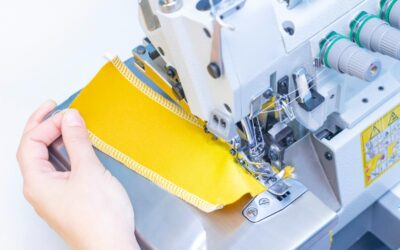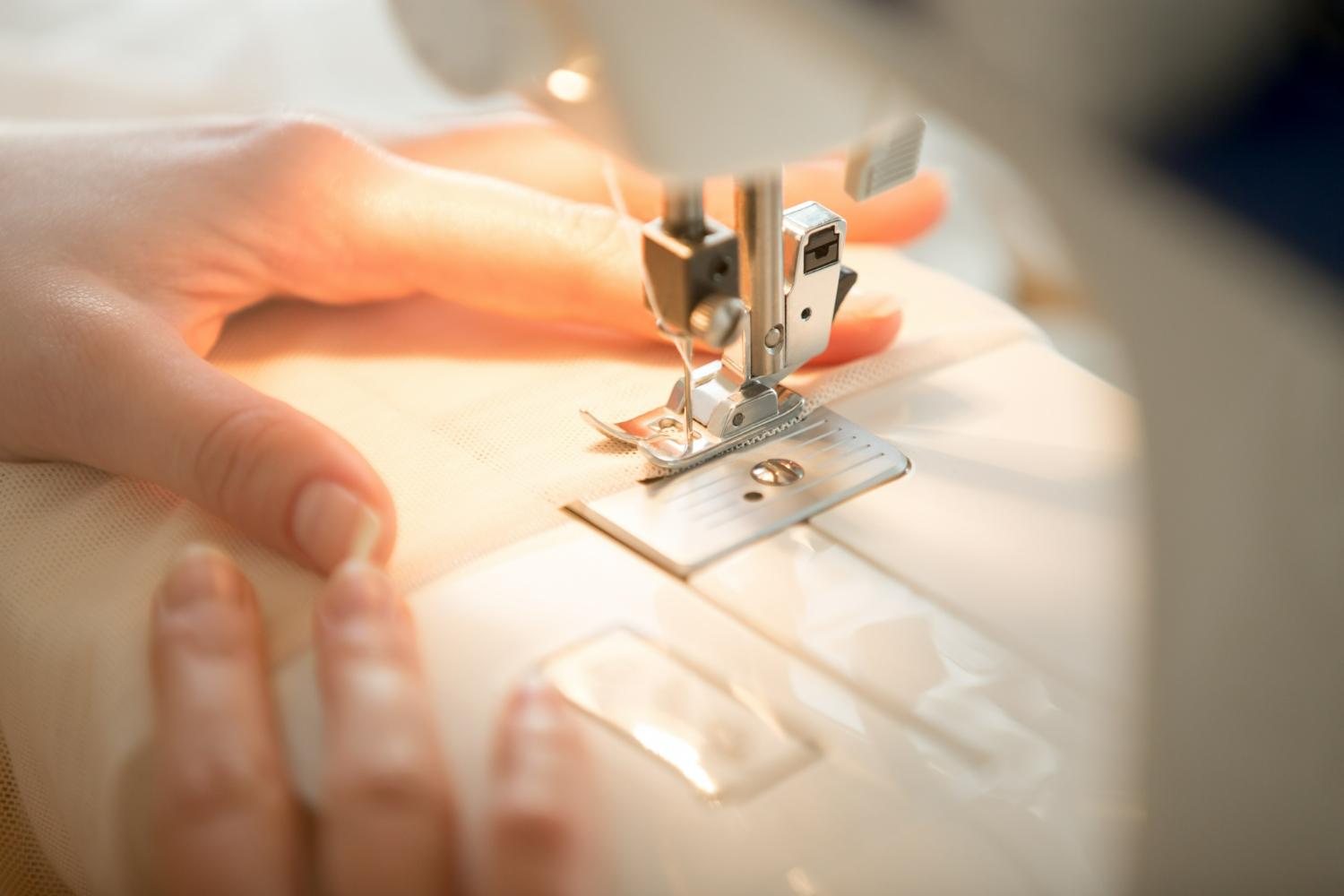
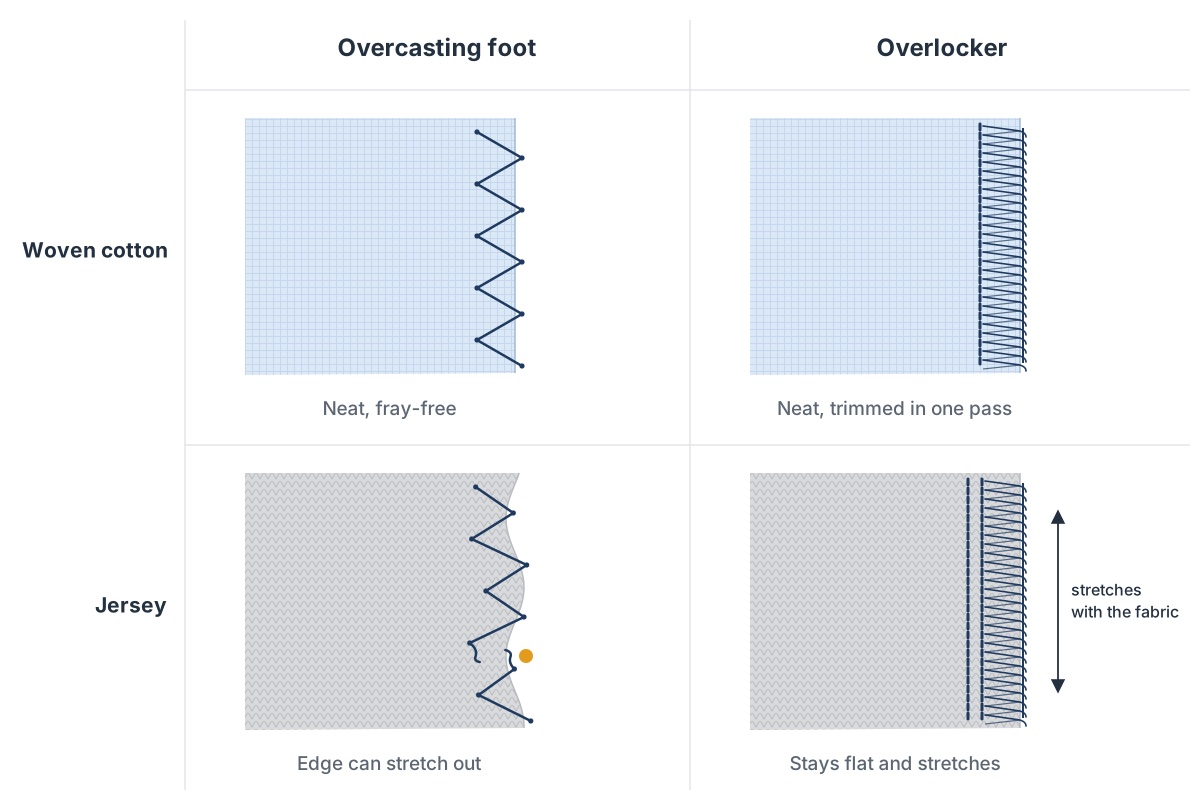
On woven cotton, very close. Sew the overlock stitch on a sewing machine with the overcasting foot and the edge comes out flat, neat and fray-free, much like an overlocked seam allowance. On jersey and other stretch fabrics, the gap shows. The foot does not trim the edge, the stitch has less give than an overlocker’s looper threads, and a household machine has no differential feed to stop knit edges stretching out.
Every JUKI household machine sews a convincing overlock-style stitch, because the precision and feed system behind the straight stitch drive the overedge stitches too. That covers each JUKI electronic sewing machine in the range. The one exception is the straight-stitch TL range.
What Is the Overlock Stitch on a Sewing Machine?
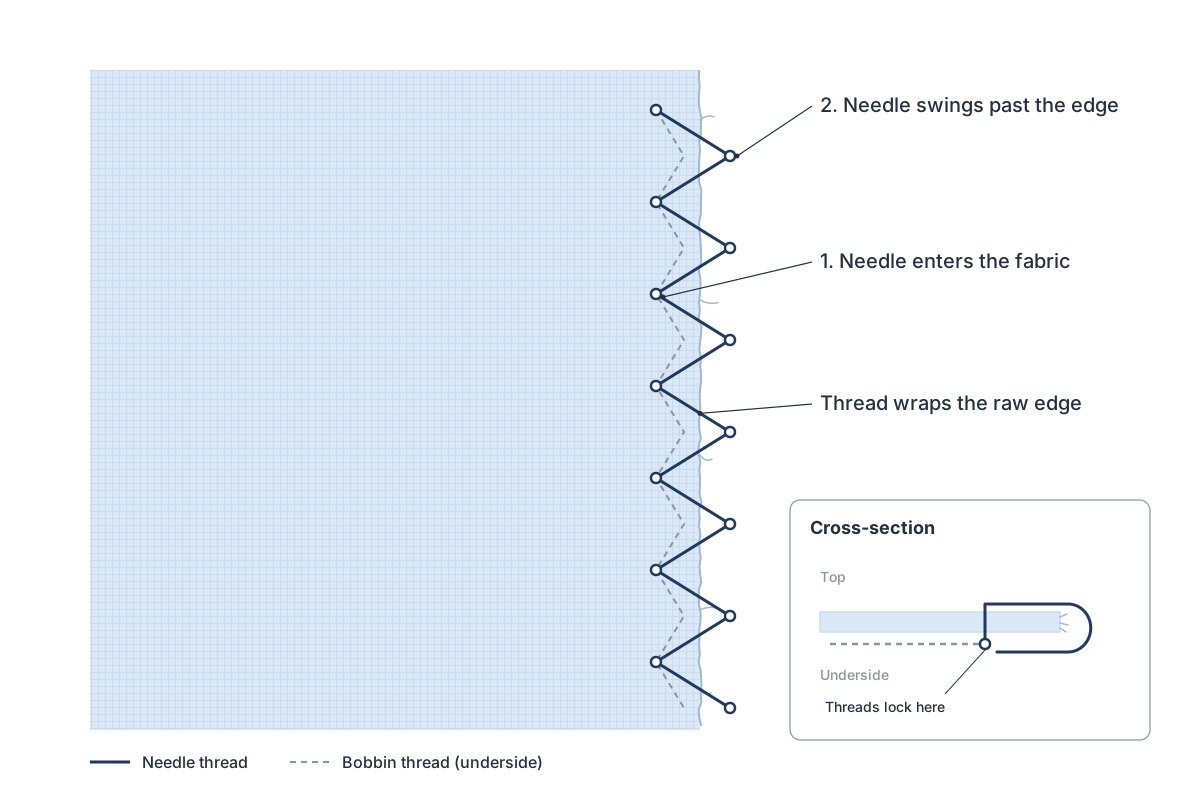
It is an overedge stitch. The needle swings to the right, just past the raw edge, then back into the fabric, so the thread wraps the edge instead of sitting beside it. The finish imitates an overlocker using only the needle thread and the bobbin thread.
That is also the main technical difference. An overlocker forms its stitch with loopers instead of a bobbin, and that stitch has its own family (class 500, overedge chain stitches) in the international stitch classification, ISO 4915. The household version is a variation of the lockstitch your machine sews for everything else.
Stitch names vary between models, but most stitch charts include three types:
- Overcast stitch: a single row of stitches wrapping the edge, for light and medium fabrics.
- Double overedge: two rows sewn together, for fabrics that fray heavily, such as linen.
- Overlock-style stitch: a straight stitch combined with wrapping stitches, the closest in look to an overlocker.
Your manual shows which of these are designed for the overcasting foot.
On the HZL-DX7, the overlock stitches sit among 287 stitch patterns. They are fed by JUKI’s box feed, a system taken from JUKI’s industrial machines that moves the fabric evenly under the foot, which is what lets the stitch form cleanly right at the edge. The TL straight-stitch machines are built for straight stitching only, so they have no overlock stitch.
How Does the Overcasting Foot Work?
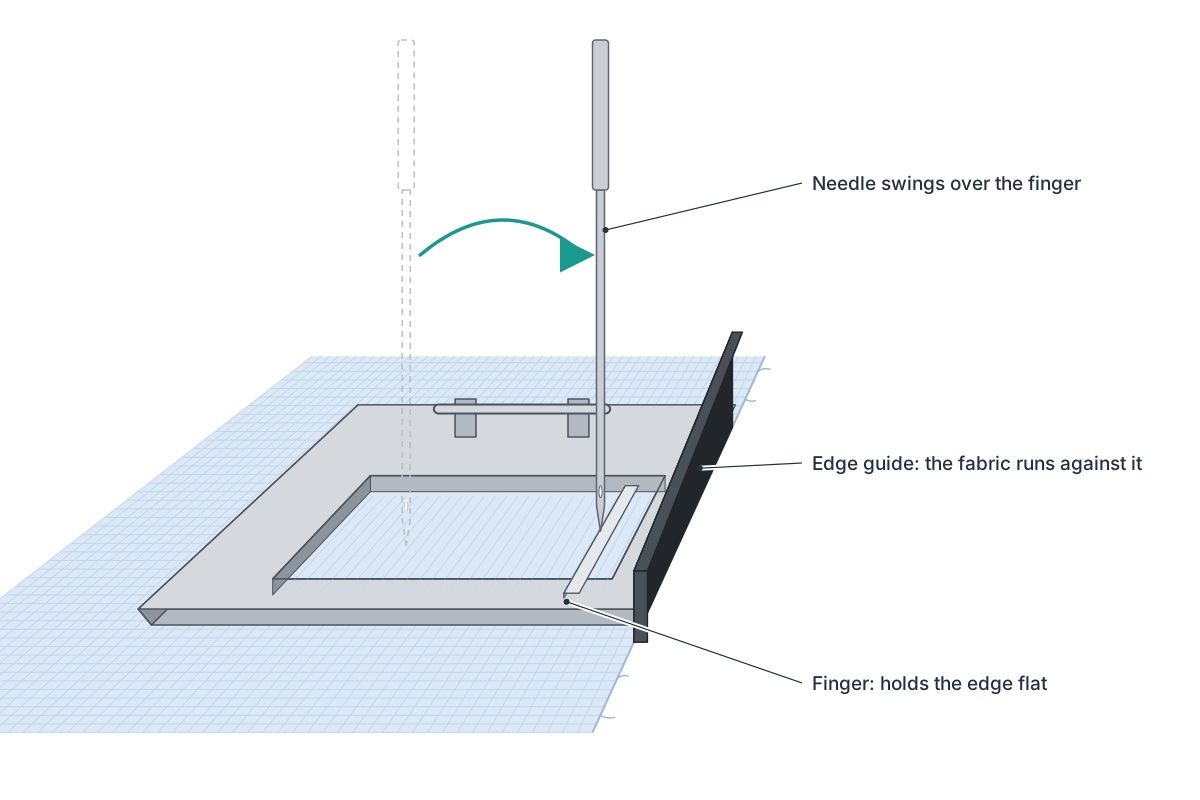
The overcasting foot holds a thin metal bar, or finger, right at the fabric edge. The needle swings over that bar on every right-hand stitch, so the thread forms around the bar instead of tightening around the fabric. The edge stays flat rather than drawing up into a hard ridge.
The overcasting foot is included with every JUKI machine, and it works on the same principle as an overlocker. As our team puts it, it uses a bar or “finger” to prevent the fabric from rolling. On an overlocker, the stitch finger on the needle plate does that job.
A guide on the foot keeps the edge running straight, which matters because the foot does not cut. Trim the seam allowance to its finished width first, then overcast it; there is nothing to trim afterwards. University of Kentucky Cooperative Extension’s seam finishing guide gives the same order: trim, then stitch with the overcast presser foot.
One caution: use the stitches your manual pairs with this foot. JUKI’s accessory guidance says the overcasting foot is not for zigzag stitches, because a wide swing can strike the finger. If yours is lost or damaged, the overcasting presser foot is sold separately, alongside the rest of the JUKI sewing machine feet.
Overcasting Foot vs Overlocker: What Changes on Cotton and Jersey?
On woven cotton, the two finishes are close: both stop fraying and both lie flat inside a garment. On jersey, the overlocker pulls ahead, because its seam stretches with the fabric and its differential feed keeps the edge from going wavy.
Woven Cotton
Woven fabric frays but barely stretches, so the stitch has one job: hold the edge. A household overedge stitch does that well, and on a medium-weight cotton the result comes close to an overlocked seam allowance. The difference is mostly in the process. The overlocker trims and finishes in one pass; with the foot, you trim first and stitch second.
Jersey and Other Stretch Fabrics
Here the gap shows. As our team puts it, you can see the difference when using a sewing machine on a stretch fabric. Three things cause it:
- Stretch. A stitch made from needle and bobbin thread has limited give, so it can snap when the seam is pulled. An overlocker’s looper threads move with the knit.
- Feed. Without differential feed, a knit edge can stretch out under the foot and finish wavy.
- The job itself. Jersey does not fray, it curls. A finish on jersey is about stretch and control, which is what an overlocker is built for.
The University of Kentucky guide agrees: it recommends the machine overedge stitch for fraying woven fabrics, not knits.
| Overcasting foot on a household machine | Overlocker | |
|---|---|---|
| Trims the edge | No, trim first | Yes, a knife trims as it sews |
| Threads | Needle and bobbin | 3 or 4 threads through loopers |
| Stretch in the finish | Limited | Good, the looper threads give |
| Differential feed | No | Yes, prevents wavy or puckered edges |
| On woven cotton | Close to an overlocked finish | Trimmed and finished in one pass |
| On jersey | Edge can stretch out; stitches can snap under strain | Seams and finishes in one stretchy pass |
For knit seams, an overlocker usually sews a 3 or 4-thread stitch; our guide to overlocker stitch types explains which to choose.
When Is the Overcasting Foot the Better Choice?
When the job is small, woven or hidden inside a garment, the foot is often the quicker tool, even for someone who owns an overlocker.
- A single repair or one seam, where re-threading an overlocker would take longer than the sewing.
- Seam allowances on wovens that you will press open, finishing each side separately.
- A thread colour your overlocker is not threaded with.
- Edges you do not want trimmed, such as a seam allowance you may need to let out later.
Plenty of sewers keep both machines for exactly this reason. JUKI ambassador Janet Poole, a quarter-finalist on series 5 of The Great British Sewing Bee, sews on an HZL-DX7 she calls “a workhorse with bells on”, alongside an MO-654DE overlocker.
Do You Need an Overlocker If Your Machine Has an Overlock Stitch?
Not if you mostly sew woven fabrics. If you sew jersey, activewear or knit garments regularly, or want a ready-to-wear finish inside your clothes, an overlocker earns its place.
- Mostly cotton dressmaking, quilting or bags: the overcasting foot covers it.
- Occasional knits: the foot plus a stretch stitch will get you through; expect a less flexible seam.
- Regular jersey, activewear or loungewear: an overlocker saves time and gives stronger, stretchier seams.
- Batch sewing or selling what you make: the overlocker’s one-pass finish makes the bigger difference.
The JUKI domestic overlockers range runs from models with colour-coded threading to air-threading machines. The MO-654DEN, the current version of the overlocker Janet uses, sews 2, 3 and 4-thread stitches with built-in rolled hemming. For the full range of machines, feet and stockists, visit JUKI UK.