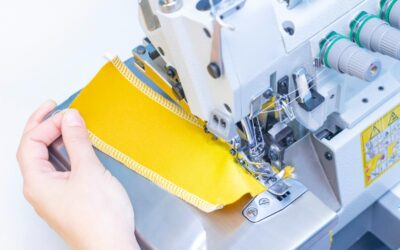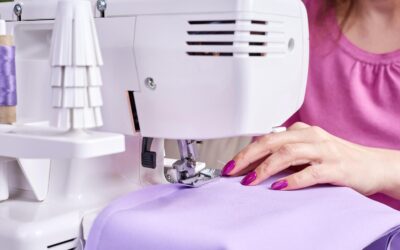
Overlocker vs sewing machine comes down to where on the fabric each one works. A sewing machine builds the garment. It forms a lockstitch from a top thread and a bobbin thread, so it can stitch anywhere, from a zip in the middle of a panel to a buttonhole on a cuff. An overlocker (called a serger in the US) sews seams too, but it works at the fabric edge: in one pass it stitches the seam, trims the allowance with a knife and wraps the raw edge in thread from loopers, which makes it the faster choice for seaming jersey. The two overlap on seaming and neatening edges, but neither replaces the other. The twin-row hem on a shop-bought t-shirt belongs to a third machine, the coverstitch.
What Does a Sewing Machine Do That an Overlocker Cannot?
Anything that happens away from the raw edge or needs a precise stop and start. Zips, buttonholes, topstitching, darts, pockets and quilting are all sewing machine jobs.
The HZL-DX7 shows how much of this one household machine carries. It has 287 stitch patterns including 16 buttonhole styles, a drop feed for free-motion work, and more than 30 needle positions in straight stitch for setting concealed zips and piping. Janet Poole, a quarter-finalist in series 5 of The Great British Sewing Bee, describes her DX7 as a workhorse with bells on and picks out its buttonhole system.
The full range is under JUKI household sewing machines.
What Does an Overlocker Do That a Sewing Machine Cannot?
It trims the seam allowance with a built-in knife and wraps the cut edge in thread in the same pass. The result is a stretchy seam that will not fray, sewn quickly.
A 4-thread overlocker uses two needles and two loopers, one upper and one lower, all fed from cones on a thread stand. The loopers carry thread over and under the fabric edge and interlock with the needle threads, so the edge is enclosed rather than stitched through (how an overlock stitch is formed). The knife sits just ahead of the needles, so every seam allowance comes out the same width.
Differential feed. An overlocker has two sets of feed dogs, one in front of the other, and you can set them to move at different speeds. With the front set moving more, jersey stops stretching out into a wavy seam. With it moving less, lightweight fabric stops puckering. Push the front set further still and the machine gathers the fabric as it sews.
Built-in rolled hem. Domestic overlockers switch to a narrow, tightly rolled edge for chiffon, scarves and frills. On the MO-654DEN, you move a lever on the needle plate and adjust one tension dial. Turn up the differential feed while rolling the edge of a stretch fabric and you get a lettuce-leaf edge.
Compare models in the JUKI domestic overlockers range.
Where Do Overlockers and Sewing Machines Overlap?
Both machines can join a seam and neaten a raw edge. They do it with different stitch structures, though, so the results look and behave differently.
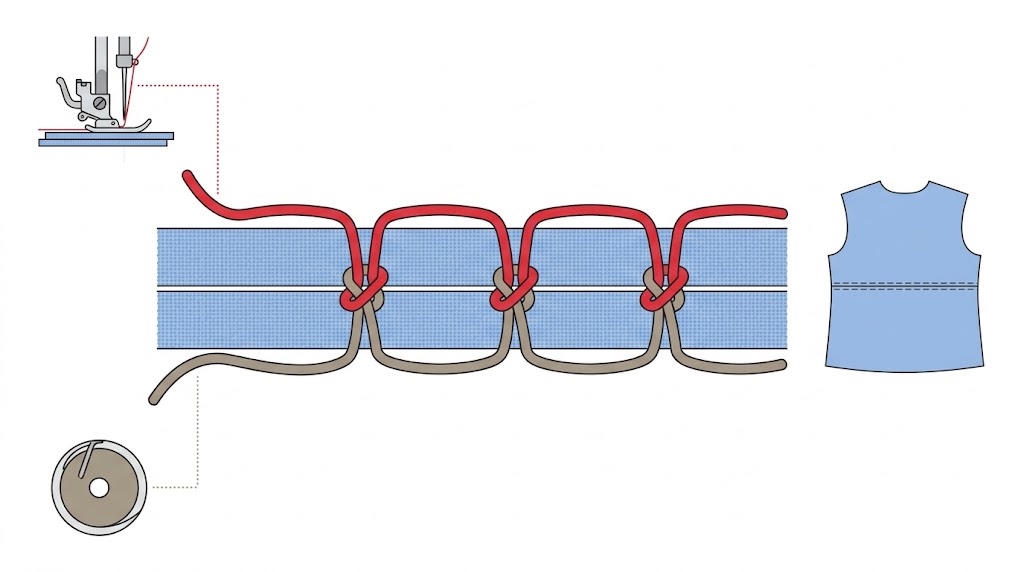
Stitch types are grouped by how their threads interlock in the ISO 4915 stitch types standard. A sewing machine forms a lockstitch (class 300). An overlocker forms an overedge chainstitch (class 500), where looped threads wrap the edge and can extend with the fabric. The overcast stitch on a household machine copies the look of overlocking, but it is still a lockstitch, sewn beside an edge that nothing has trimmed.
| Task | Sewing machine | Overlocker | Usually better on |
|---|---|---|---|
| Seaming woven fabric | Straight lockstitch: strong and precise | Possible, but the seam can pull open under strain on fitted garments | Sewing machine |
| Seaming jersey and stretch | Stretch stitch or narrow zigzag | 4-thread overlock stretches with the fabric | Overlocker |
| Neatening raw edges | Zigzag or overcast stitch with an overcasting foot | Trims and wraps the edge in one pass | Either; the overlocker is faster and neater |
| Rolled hems on fine fabric | Rolled hemming presser foot; takes practice | Built-in rolled hem | Overlocker |
| Gathering and attaching elastic | Two rows of long stitches, or zigzag over elastic | Differential feed and multi-purpose foot | Either |
| Hemming a t-shirt | Twin needle; can tunnel on fine jersey | Cannot sew a coverstitch hem | Neither: a coverstitch machine |
Fit the Overcasting Presser Foot to a JUKI HZL-DX, G, H, NX or UX series machine, select the overcast stitch, and it holds the edge while the stitch forms over it. On a lined skirt, or trousers where the seam allowances will never be seen, that is all you need. The edge will not fray and you have not bought a second machine.
Sew a jersey t-shirt side seam the same way and the limits show. The overcast lockstitch has little give, so when the fabric stretches the thread pulls tight or snaps, and thin jersey can tunnel up under the stitch.
Rolled hems are closer. A Rolled Hemming Presser Foot gives a narrow turned-and-stitched hem on a household machine, which suits fabrics where you want a folded hem rather than a thread-wrapped edge..
Why Can’t an Overlocker Hem a T-Shirt?
Because the twin rows of stitching on a shop-bought t-shirt hem are a coverstitch, and a standard overlocker does not sew one.
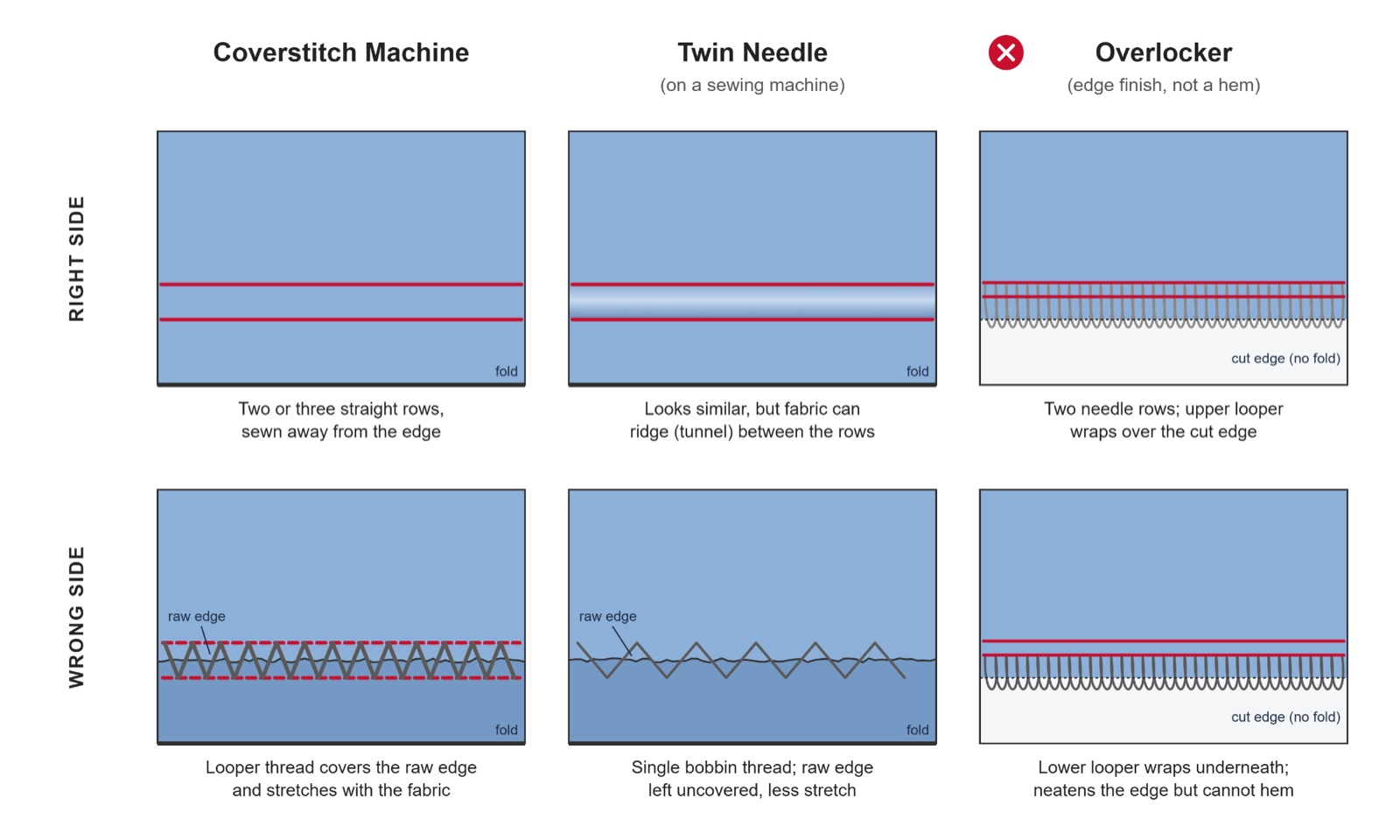
A hem needs stitching some way up from the fold, through two layers, with nothing cut. A coverstitch machine does that with two or three needles on top and a single looper underneath. The right side shows parallel straight rows, while the looper thread forms a mesh on the wrong side that covers the raw edge and lets the hem stretch.
On a sewing machine, the workaround is a twin needle. It gives the same two rows on the right side, but underneath there is only a single bobbin thread zigzagging between them. On lightweight jersey, expect less stretch and a raised ridge between the rows.
If you hem knits regularly, the MCS-1800 sews a 3, 2 or 1 needle coverstitch with adjustable differential feed. The rest of the range is under coverstitch machines.
Why Do Most Dressmakers End Up Using Both?
Because a garment moves between them. The sewing machine handles construction and details, the overlocker handles knit seams and edge finishing, and many garment sewists add a coverstitch for hems.
Several of JUKI’s ambassadors from The Great British Sewing Bee list exactly that setup:
- Janet Poole (series 5): HZL-DX7, MO-654DE and MCS-1800
- Mercedes Ferrari-Plumridge (series 5): NX7 Kirei, MO-654DE and MCS-1800
- Liz Grylls (2020 series): HZL-UX8, MO-654DE and MCS-1800
Mercedes uses her trio on fabrics from silk chiffon to upholstery-weight coat fabric. Each of the three pairs a computerised household machine with the same overlocker, the MO-654DE, which is a useful real-world reference if you are choosing a pair.
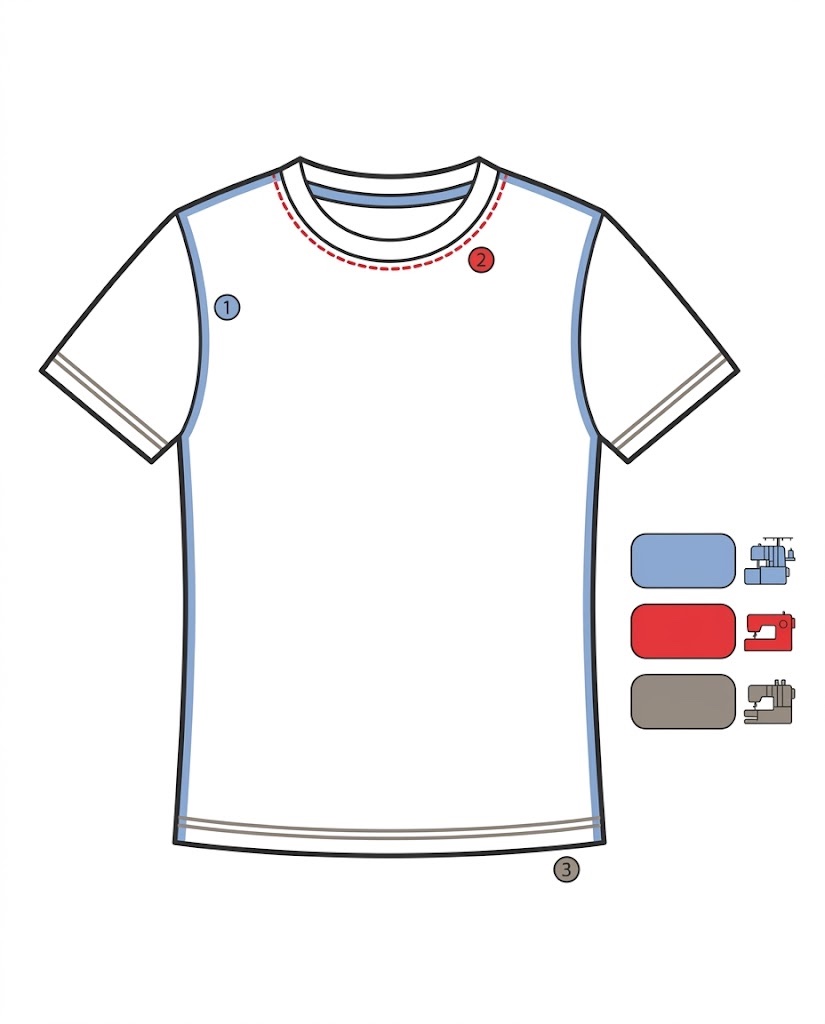
A simple jersey top shows how the work passes between machines:
- Overlocker: shoulder seams, neckband, sleeves (set in flat) and side seams
- Sewing machine: topstitching the neckband seam allowance down, plus any buttonholes, tabs or pockets
- Coverstitch: sleeve and bottom hems (or a twin needle on the sewing machine)
Wovens change the balance, since a sewing machine alone can make a lined dress or tailored trousers from start to finish. For a garment-by-garment answer, see our guide on whether you need an overlocker for the clothes you make.
Which Machine Should You Buy First?
Buy a sewing machine first unless you already own one. Add an overlocker when knits or edge finishing start slowing you down.
- No machine yet: start with a household sewing machine. It does every job an overlocker cannot, and with an overcasting foot it neatens edges until you are ready for more.
- You own a sewing machine and sew mostly jersey or activewear: add an overlocker. The MO-644D is the entry point, with 2/3/4 thread overlocking, differential feed and a built-in rolled hem.
- Hems on knits are the frustration: look at a coverstitch machine before anything else.
Try at a sewing show or through a JUKI stockist before you decide. Machines from JUKI UK come with a 2-year manufacturer’s guarantee and UK-based support.