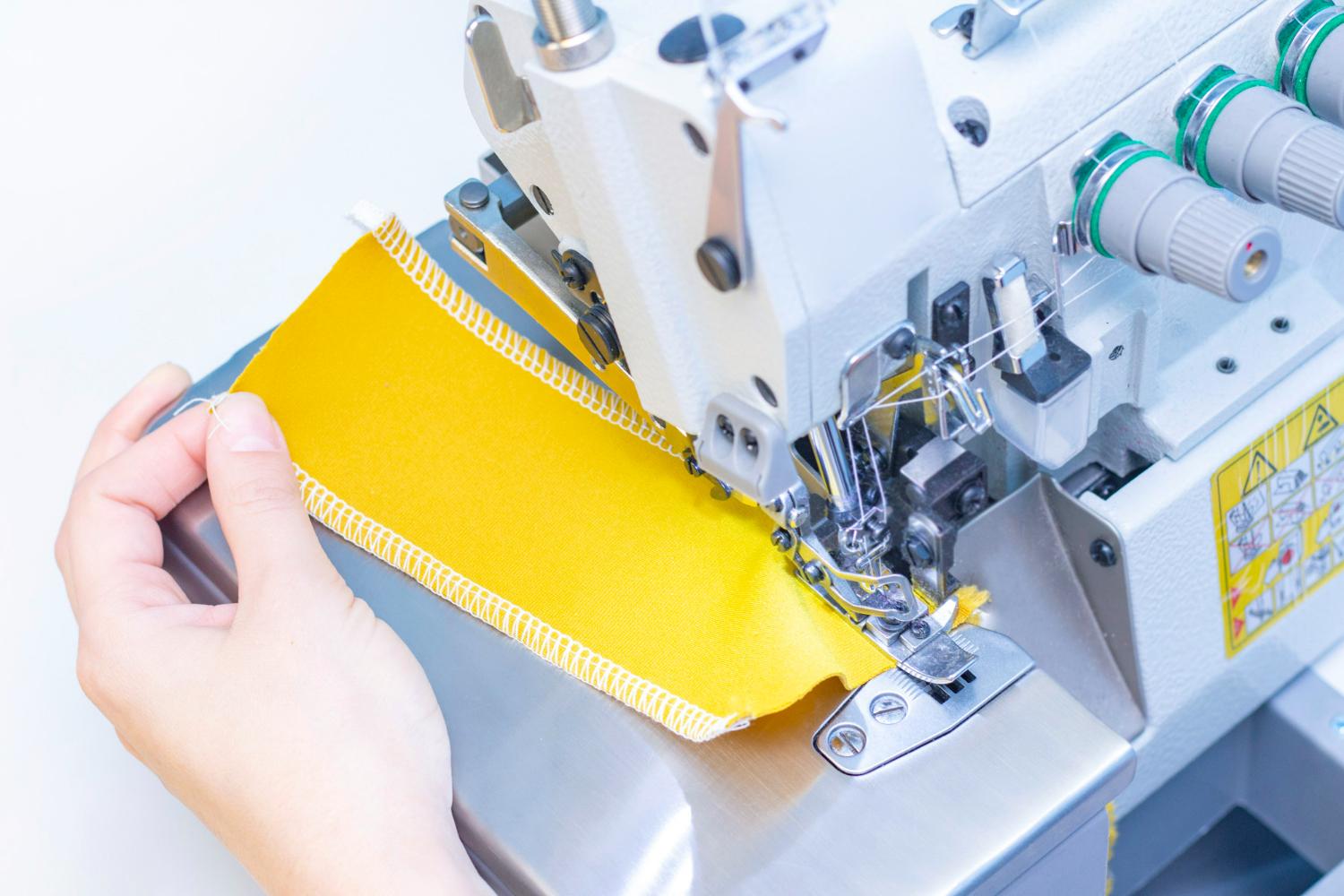
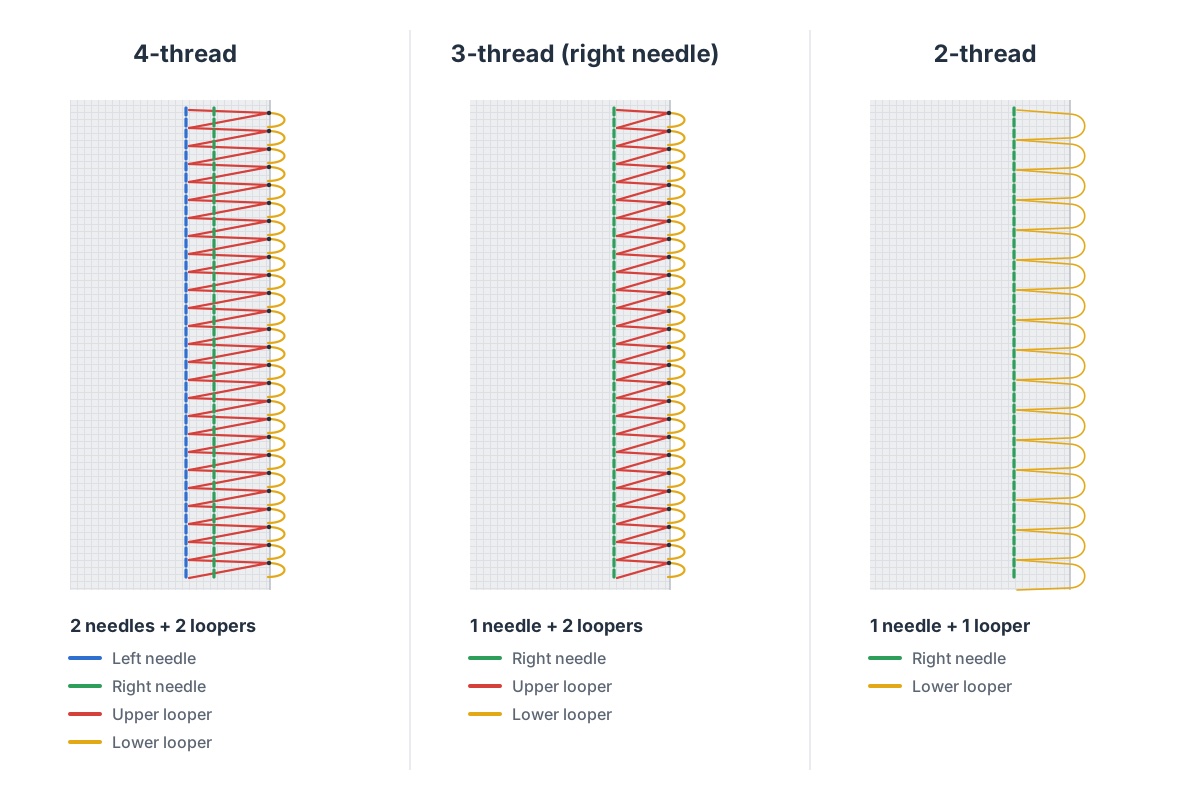
An overlocker stitch is named after the number of threads that form it. A 4-thread overlock uses two needles and two loopers and is the stitch for strong seams. A 3-thread overlock drops one needle, for lighter seams and edge finishing. A 2-thread overlock uses one needle and one looper for the lightest finish on fine fabrics. Flatlock and rolled hem are not extra stitch types: they are 2 or 3-thread stitches with the settings changed.
Every machine in the JUKI domestic overlockers range sews 2, 3 and 4-thread stitches. What differs between models is how each one switches to 2-thread.
How Are Overlocker Stitches Named?
By thread count, which is the number of needles plus the number of loopers in use. Loopers take the place of a sewing machine’s bobbin and interlock the threads around the edge, which makes the stitch closer to knitting than to a lockstitch, as New Mexico State University’s overlocker guide explains.
Industry spec sheets sometimes use stitch codes instead of thread counts. These all sit in class 500, the overedge stitches, of the international standard ISO 4915.
On JUKI overlockers, each thread path is colour-coded, so you can trace every thread to its needle or looper. Coming from a household machine? Our comparison of the overlock stitch on a sewing machine shows what an overlocker adds.
What Is a 4-Thread Overlock Stitch Used For?
Seaming. The second needle line adds strength, so a 4-thread overlock suits seams that take strain in both knit and woven garments, according to the New Mexico State University guide. It sews the seam and finishes the edge in one pass.
Use it for T-shirts, leggings and sweatshirts, and for side seams on woven dresses and trousers.
Where it is overkill: finishing an edge on its own. University of Kentucky Cooperative Extension’s seam finishing guide calls 4-thread unnecessary for edge finishes because it only adds bulk; a 2 or 3-thread stitch does the job.
3-Thread Overlock: Wide or Narrow?
Take out one needle. Keep the left needle for a wide stitch or the right needle for a narrow one; JUKI’s specifications describe the same choice.
A 3-thread overlock has more give than a 4-thread, so the University of Kentucky guide recommends it for knit seams where stretch matters more than strength. It is also the everyday edge finish for woven seam allowances.
Keep it away from seams under heavy strain, such as a trouser crotch or a sleeve seam (New Mexico State University). The same stitch is the base for the rolled hem and flatlock.
2-Thread Overlock: When Do You Need It?
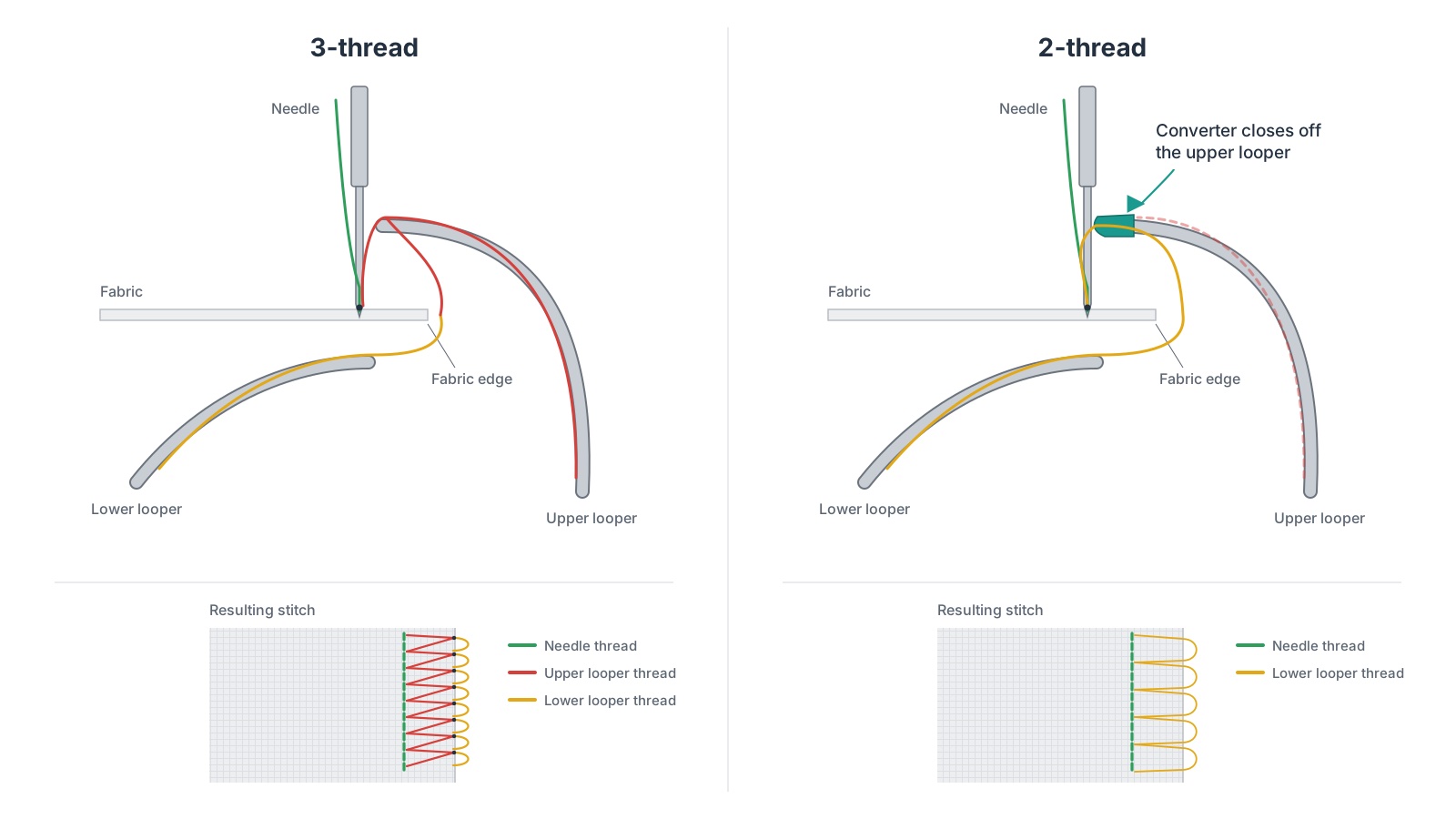
For the lightest edge finish on fine fabrics. One needle thread and the lower looper thread wrap the edge, while a converter closes off the upper looper. It leaves the least bulk of any overlock stitch, but it is a finish rather than a seam: keep it away from anything that takes strain (New Mexico State University).
Use it on voile, chiffon and lightweight cotton seam allowances, and on scarf and napkin edges.
If 2-thread matters to you, check how a model handles it before you buy. Not every 3 and 4-thread overlocker converts to 2-thread.
Which JUKI Overlockers Sew 2-Thread?
| Model | How it switches to 2-thread |
|---|---|
| MO-214D | 2-thread converter included in the accessories |
| MO-644D | Optional: add the upper looper converter |
| MO-654DEN | 2/3-thread converter supplied as standard |
| MO-1000 | Built-in changeover on the upper looper |
| MO-2000QVP | Built-in changeover; the screen shows settings for 15 stitches |
| MO-2500 Sumato | Sews 2-thread |
| MO-3500 Sumato | Built-in changeover; automatic thread supply sets the tensions |
Flatlock and Rolled Hem: Same Threads, Different Settings
Both are 2 or 3-thread stitches with the tensions changed, rather than separate stitch types.
Flatlock
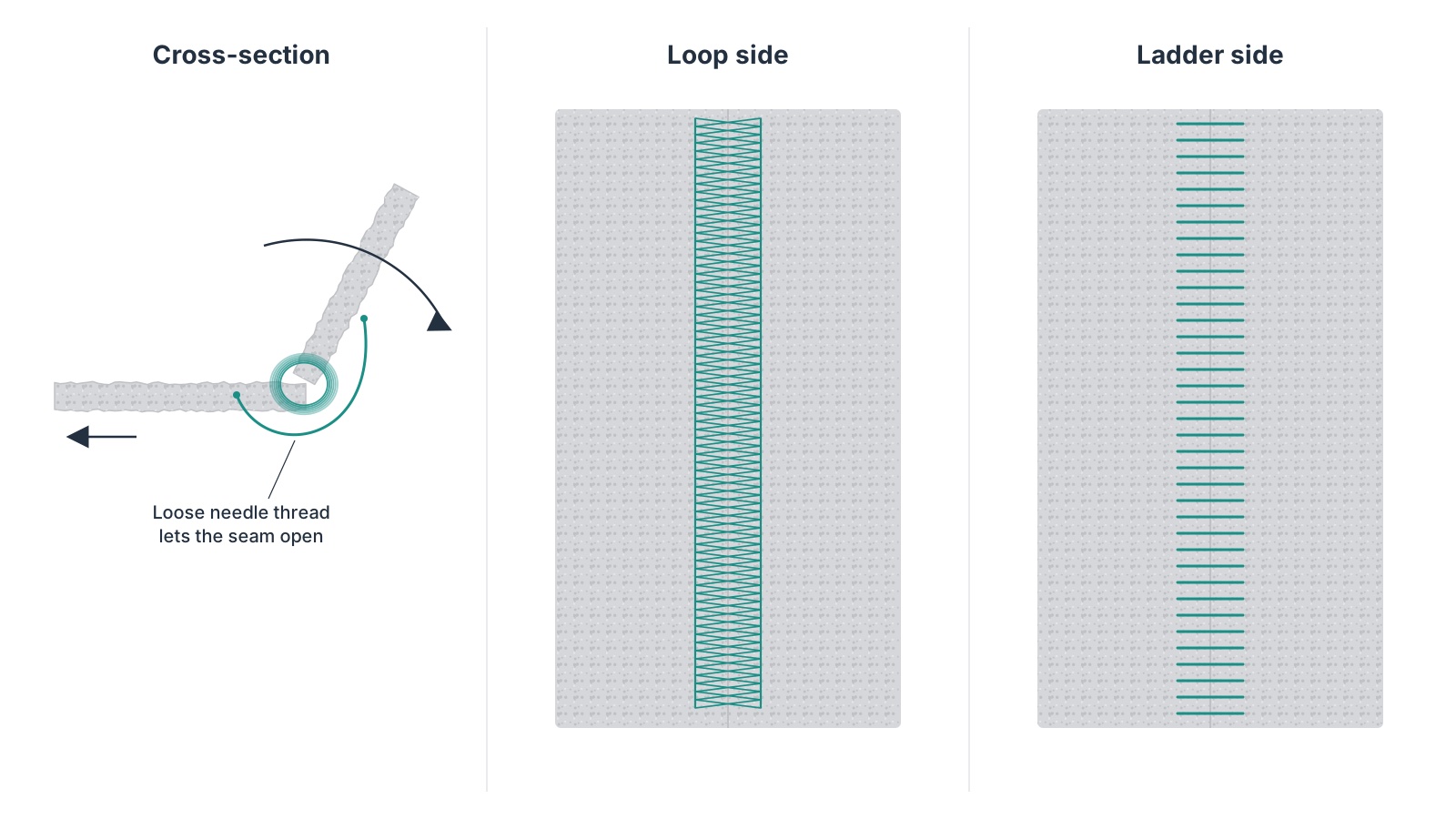
Loosen the needle thread and the seam pulls open to lie flat, with loops on one side and a ladder on the other. Either side can face out. Flatlock suits activewear, fleece and sweatshirts, where a seam ridge would rub.
Rolled Hem
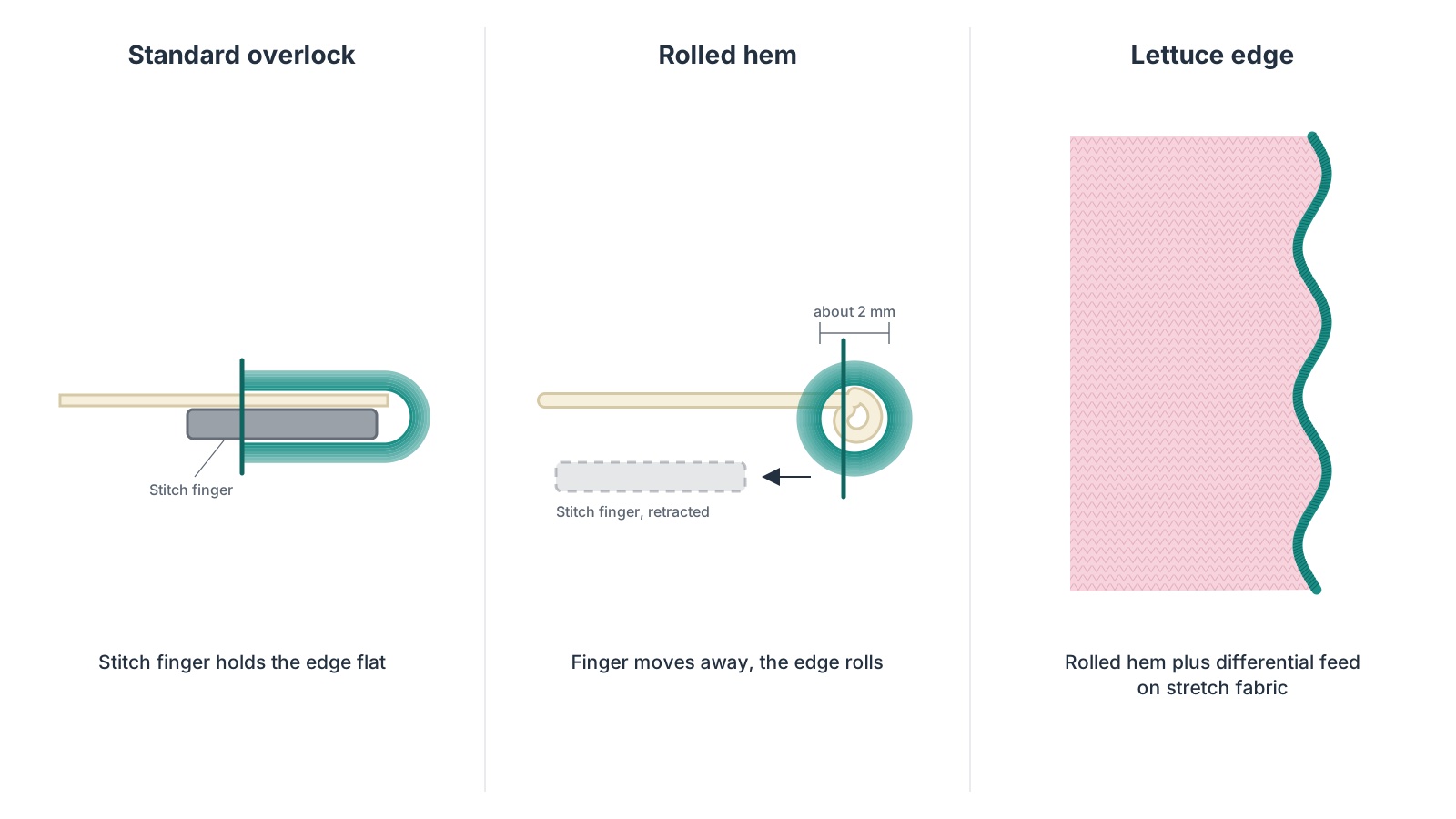
The edge rolls under as it is stitched and is wrapped in thread, giving a narrow finish for scarves, napkins and fine fabrics. On JUKI overlockers with automatic rolled hemming, you switch with a lever, with no change of foot or needle plate. On stretch fabric, combine it with differential feed for a frilled “lettuce” edge; JUKI lists a frill 3-thread rolled hem among the MO-2000QVP’s stitches.
One stitch an overlocker does not sew is the hem with two parallel rows of stitching on top, seen on most T-shirts. That is a coverstitch, made on a coverstitch machine.
Which Overlocker Settings Trip People Up?
- The converter left in place. If the 2-thread converter is still fitted when you switch back to 3 or 4-thread, the upper looper cannot form its part of the stitch. Remove or disengage it first.
- Wavy jersey treated as a tension problem. A wavy edge on knits usually comes from the feed. Raise the differential feed above its neutral setting so the front feed dogs ease more fabric in, before you touch the tensions.
- The rolled hem setting left on. If a standard overlock comes out narrow and rolled, check the rolled hem lever before changing anything else.
Which Overlocker Stitch Should You Use?
Most projects need two: a 4-thread overlock for seams and a 3-thread overlock for finishing edges. The rest are for specific fabrics and finishes.
| Job | Stitch | Why |
|---|---|---|
| Seaming jersey tops and leggings | 4-thread | Stretch, plus a second needle line for strength |
| Seaming woven garments where seams take strain | 4-thread | The most secure overlock seam |
| Neatening seam allowances on cotton or linen | 3-thread (2-thread on lightweight fabric) | Less bulk than 4-thread |
| Edges on voile or chiffon | 2-thread or narrow 3-thread | The lightest finish |
| Scarf and napkin edges | Rolled hem | A narrow, fully wrapped edge |
| Flat seams on activewear or fleece | Flatlock | The seam lies flat against the skin |
| Hems on knit garments | Coverstitch (a different machine) | Overlockers do not sew this stitch |
If you would rather not thread the loopers by hand, the MO-2500 Sumato threads them with air. Add specialist feet from the overlocker feet and accessories range for techniques such as gathering, piping and elastic. For the full range of machines and stockists, visit JUKI UK.